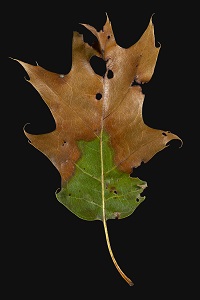
Oak wilt (caused by Bretziella fagacearum) continues to be one of the most damaging threats to Quercus species in the Upper Midwest and Eastern United States. Most new oak wilt infections annually occur as the result of belowground spread through grafted root systems, therefore stopping belowground spread is a central approach to disease management.
EAB University will hold a Controlling the Below Ground Spread of Oak Wilt webinar on September 29th from 1 to 2 pm ET.
This talk by Dr Anna Wang from the Forest Services’ Northern Research Station reports on recent and ongoing Minnesota research building on existing oak wilt containment methods and improving their efficacy. It presents results from a five-year evaluation of a practitioner-developed model for vibratory plow line placement on high disease hazard sand plain sites, in which we compared single versus double-pass vibratory plow lines for disease containment. Double-pass lines stopped below-ground spread in 80% of sites compared to 60% for single-pass.
We also share pilot results from an ongoing herbicide study evaluating glyphosate and triclopyr as alternatives for belowground disease containment.
To take part in this webinar, register at EAB Network