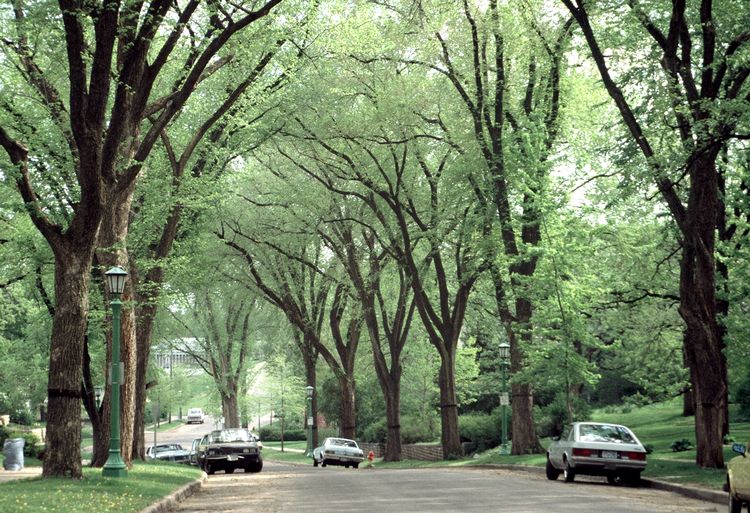
American Elms (Ulmus Americana) were the most extensively planted landscaping tree used in American cities in the 19th century, featuring Y shaped crowns that arched over city streets. An imported fungus, the Dutch elm disease, led to extensive mortality of these trees in the early 20th century.
The Ecological Landscape Alliance will hold an Ulmus Americana – Saving an American Icon webinar on March 9th from 6 to 7 p.m.
In 1909, while collecting Leopard Moth larva from elm trees in the college yard at Harvard University, Dr. James W. Chapman discovered small grubs and adult beetles under the bark. With the aid of Dr. A.D. Hopkins, the first identification of the smaller European elm bark beetle, Scolytus multistriatus was confirmed in Massachusetts. S. multistriatus is the primary vector of Dutch Elm Disease (DED).
DED is a fungus that invades the vascular system of a tree and killed millions of American elm trees in the United States.
With the support of the Friends of the Public Garden and the Boston Parks and Recreation Department, Normand and Christine Helie of The Growing Tree have been monitoring and caring for the elm trees in the downtown Boston Parks since 2012. Their research on the smaller European elm bark beetle picks up where Dr. Chapman left off. Sharing their insights on the relationship of the beetle with the young and historic elm trees in the parks, they hope to inspire us to bring the native American elm back to our landscapes.
This program is free for ELA members, $10 for non-members.
To register, go to https://www.ecolandscaping.org/product/non-member-saving-american-icon/?event=154912