
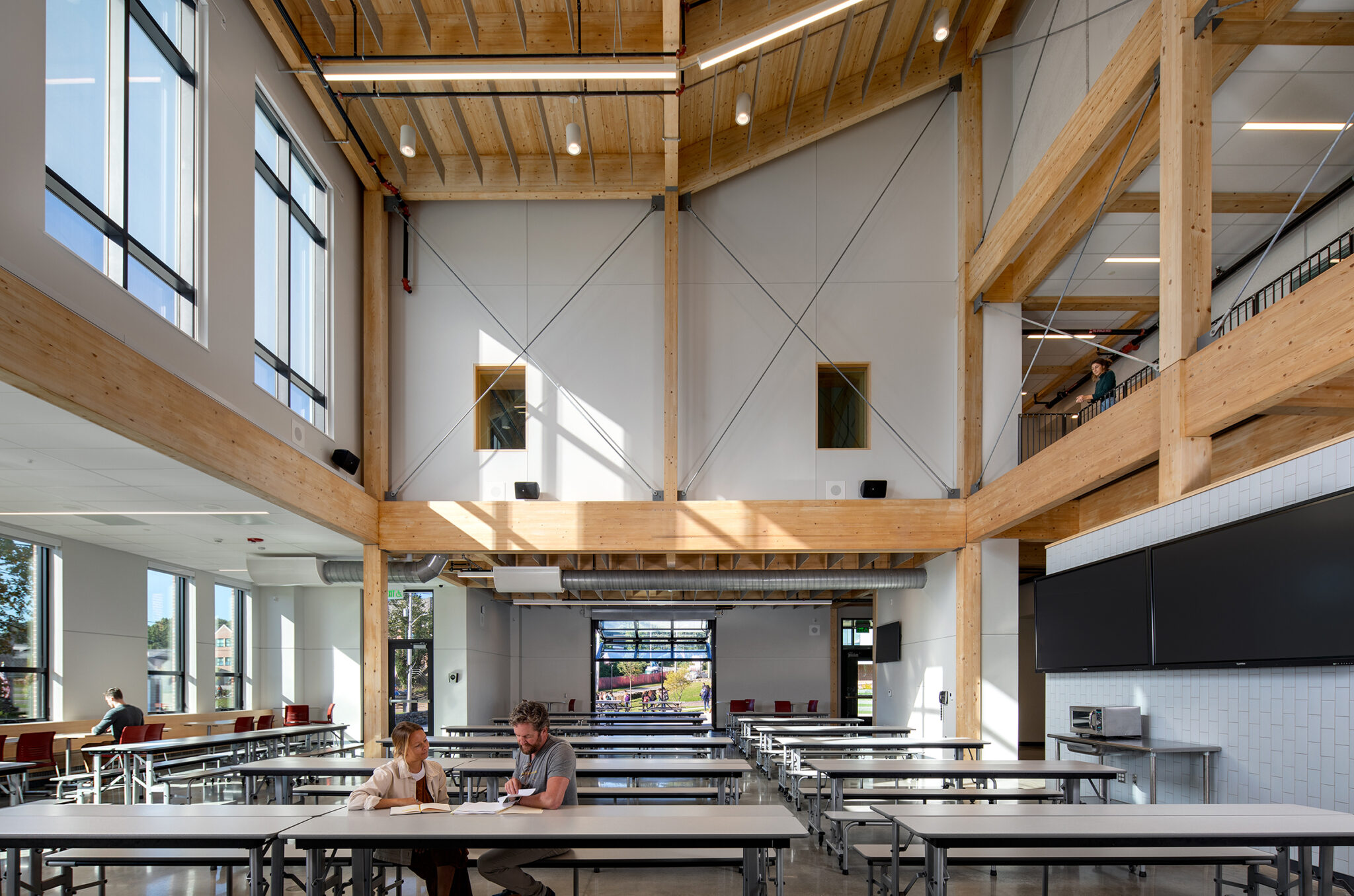
 Mass timber construction is often perceived as acoustically inferior to conventional construction types, particularly in multi-family buildings subject to code-mandated sound transmission requirements. These perceptions often lead to design approaches that increase assembly mass—most commonly by adding concrete toppings, which can diminish the embodied carbon benefits of mass timber systems.
Wood Works will hold a Mass Timber Acoustic Design: Variables and Solutions webinar on September 9th from 1 to 2 pm EDT.
This presentation by Mike Raley from the Oregon Acoustic Research Laboratory, introduces the principles of sound transmission and isolation to provide a framework for understanding acoustical behavior in building assemblies. It will also cover acoustic flanking and how it relates to mass timber construction.
This webinar evaluates the validity of these assumptions through a review of measured baseline acoustical performance data for mass timber assemblies and comparisons with conventional construction types. The presentation introduces the principles of sound transmission and isolation to provide a framework for understanding acoustical behavior in building assemblies, followed by an examination of design and construction strategies for improving airborne and structure-borne sound isolation in mass timber floors and walls. The presentation will also cover acoustic flanking and how it relates to mass timber construction. Participants will gain insight into informed decision-making strategies that balance performance, constructability, and sustainability.
Learning Objectives:
- Compare the baseline airborne and structure-borne sound isolation performance of mass timber assemblies.
- Compare the measured acoustical performance of mass timber assemblies with conventional construction systems and evaluate common assumptions regarding code compliance and occupant comfort.
- Evaluate the performance, constructability, and sustainability tradeoffs associated with common acoustical design decisions.
- Differentiate between design approaches that rely on increased assembly mass and those that improve acoustical performance through targeted detailing, and evaluate their implications for occupant welfare, sustainability, and project outcomes.
To take part in this webinar, register at Mass Timber Acoustic Design: Variables and Solutions – WoodWorks | Wood Products Council